


LITERATURE MATERIAL
A collection of research and writings by our bestowed GUSC members, on improving the living conditions for everyone through sustainable methods.
.jpeg)
01
This book by well-known Architect – Planner Jit Kumar Gupta, on the subject of Housing For All, is a timely effort on compiling the experiences of a lifetime spent in the urban planning sector in Punjab.
02
This article by well-known Architect – Planner Jit Kumar Gupta, on the subject of making Urban Cities Cool, on how cities account for a high percentage of global carbon emissions and natural resources.
.jpg)
.jpeg)
03
Cities are known to occupy central stage on the planet earth, by leveraging their ability to energize economy, promote employment and create state of art infrastructures and services for nations and communities.
04
Planned as a finite and seamless city for a finite population, Chandigarh is known globally for its innovations and experimentations in the art and science of urban planning and architecture.
.png)
.jpg)
05
Ranked holist among cities, Amritsar remains both unique and universal. Known for its history, culture, art, architecture, heritage, ambience, cuisine and human values, Amritsar is considered to be an icon among metropolises of India.
06
Urbanization rates have accelerated in the country because of population and economic expansion, with the number of metropolitan towns and cities skyrocketing. This expansion is anticipated to continue in the coming years, and India will need to pick up its game to keep up. To improve the country's service, investments must be made.
.jpg)
.jpg)
07
Poverty remains the greatest curse ever perpetuated on humanity and human beings on this planet earth. Majority of growth and developmental ills and maladies facing human settlements have genesis in the existence of poverty.
08
Considering the role and importance of travel in generating employment and promoting economy , making people travel has emerged as an important/ major agenda/ valuable option, for nations to promote economy, generate employment and augment resources , promote planned development, and remove poverty.
.jpg)
.jpg)
09
For responding effectively to COVID-19, cities need to evolve, devolve and implement strategies to support housing homeless individuals, eliminating all possibilities of utility shutoffs and transforming daily government operations.
10
Considering the criticality, relevance, role and importance of cities; Sustainable Development Goal 11 (defined by UNO) has been exclusively dedicated to making cities and communities sustainable, inclusive, resilient and safe to make the planet earth happy and healthy place to live.
.jpeg)
.jpg)
11
These problems of unplanned, unregulated, and haphazard development , have genesis in the approach adopted by the policy planners and development agencies, which ignored, marginalized, muted and diluted the uniqueness and sensitivity of hill areas besides lacking focus on creating balance between the components of environment and issues of development.
12
Located in the heart of Leh, nicknamed the cold desert, having one of the most hostile climates for human living and habitation, with temperature fluctuating wildly, bordering on extreme cold and moderate heat , educational campus housing globally known, ‘The Student’s Educational and Cultural Movement of Ladakh (SECMOL)’, has clearly demonstrated and showcased , how potential and inherent strength of art and science of Architecture can be appropriately leveraged.
.jpg)
.png)
13
Unlike normal travel, Heritage tourism remains different and distinct for the reason that it remains focused and caters to specific purpose and needs of the travel, involving people visiting areas of historical , cultural and natural importance.
14
Cities are more than just buildings and people. With growing cities, green space has become valuable. Cities choking due to paucity of open spaces, vehicular pollution is killing cities, open spaces always remain at premium.
.jpg)
.png)
15
Considering multiple dimensions and implications of housing, providing housing to all sections of populations emerged, is a priority for all communities.
16
Under the impact and influence of industrialization, migration, globalization, and rapid addition to populations, most nations, representing growing economies, are urbanizing rapidly.
.jpg)
.jpg)
17
Alexandria, Egypt, a historically significant and economically vital city, faces major challenges with stormwater runoff due to rapid urbanization, inadequate infrastructure, and climate change, leading to frequent flooding, water pollution, and soil erosion. To address these issues, I used a combination of native coastal plants, manipulation of landforms, bioretention and floating planters, wind and wave energy farms, road diets for a walkable city, and an artificial wetland; aimed to buffer the results from major storms, enhance the city’s resilience, urban tourism, accessibility, and diversity while protecting its cultural heritage.
18
rof. Jit Kumar Gupta’s book advocates for sustainable urban development in India through Nature-Based Solutions, compact city planning, and community empowerment. It addresses climate change, housing, mobility, and governance, offering practical strategies aligned with SDG 11 to build inclusive, resilient, and ecologically sustainable cities for future generations.

.png)
19
Urban sprawl refers to the uncontrolled and unplanned expansion of cities into surrounding rural and natural areas, resulting in low-density, vehicle-dependent development and environmental degradation. Driven by factors such as rapid population growth, unaffordable urban land, rising incomes, increased car ownership, technological advancements, weak governance, and demand for affordable housing, sprawl leads to fragmented habitats, pollution, inefficient infrastructure, and reduced quality of life. It undermines sustainability and economic efficiency while increasing inequality and resource strain.
20
Poverty is a multidimensional challenge that extends beyond income deprivation to include lack of access to education, healthcare, housing, and basic services. Factors such as unemployment, inflation, poor governance, and rural-urban migration perpetuate the cycle of poverty, which fuels crime, poor health, and intergenerational deprivation. To combat this, strategies include poverty-centered urban and regional planning, affordable housing, education, skill development, inclusive economic policies, and community participation. Sustainable poverty reduction demands coordinated global, national, and local efforts to ensure equality, empowerment, and universal access to basic human needs.
.png)
.png)
21
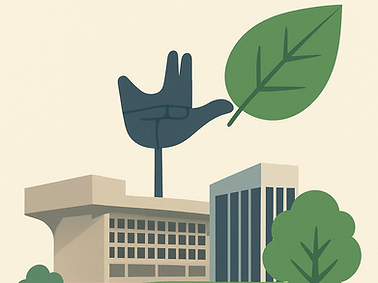
Discusses how Chandigarh, designed in the 1950s, pioneered sustainability in urban planning decades before it became a global goal. It explains how the city achieved sustainable development through thoughtful site selection, human-scale planning, green infrastructure like Sukhna Lake and Leisure Valley, protection of natural resources, and innovative architecture. Overall, it highlights Chandigarh as a global model for integrating environmental, social, and economic sustainability into city design and governance.
22
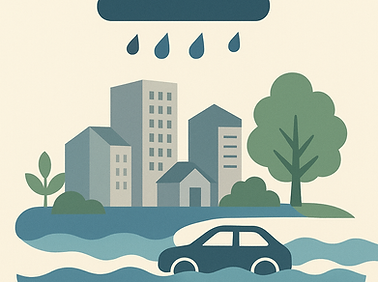
Explains how rapid urbanization, poor planning, climate change, and loss of natural ecosystems have made cities increasingly vulnerable to floods. It emphasizes the need to replace outdated drainage systems and shift from “draining” to “retaining” rainwater through sustainable urban design, green infrastructure, and nature-based solutions. The paper concludes that integrating water management into urban planning and involving communities can make cities resilient, inclusive, and aligned with the goals of sustainable development.
.png)
.jpg)
23
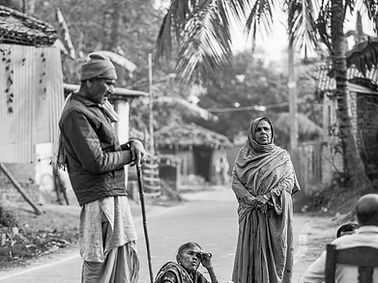
India’s future depends on revitalizing its villages, presenting a detailed analysis of rural strengths, weaknesses, opportunities, and threats to show why planned, inclusive, and sustainable village development is essential. It reviews major government schemes, constitutional amendments, and development programs while proposing practical planning tools and strategies, such as land pooling, improved governance, and community-driven initiatives, to upgrade rural housing, infrastructure, livelihoods, and self-reliance. Ultimately, it calls for integrating rural and urban development, empowering local communities, and repositioning villages as vibrant, productive, and sustainable places to live and work.